Missing teeth can affect more than your smile. Tooth loss can make it harder to chew, speak clearly, and maintain a balanced bite. Over time, nearby teeth may shift into the open space, and the jawbone in the area can begin to shrink when it no longer has a natural tooth root for support.
Two of the most common restorative treatments for missing teeth are dental implants and dental bridges. If you are comparing a dental implant vs bridge, the best choice depends on your oral health, jawbone condition, budget, timeline, and long-term smile goals.
This guide breaks down the key differences between dental implants vs dental bridges, including how each treatment works, their pros and cons, cost considerations, and who may be a good candidate for each option.
Dental Implant vs Bridge: What Is the Main Difference?
The biggest difference between a dental implant and a dental bridge is how each treatment replaces a missing tooth.
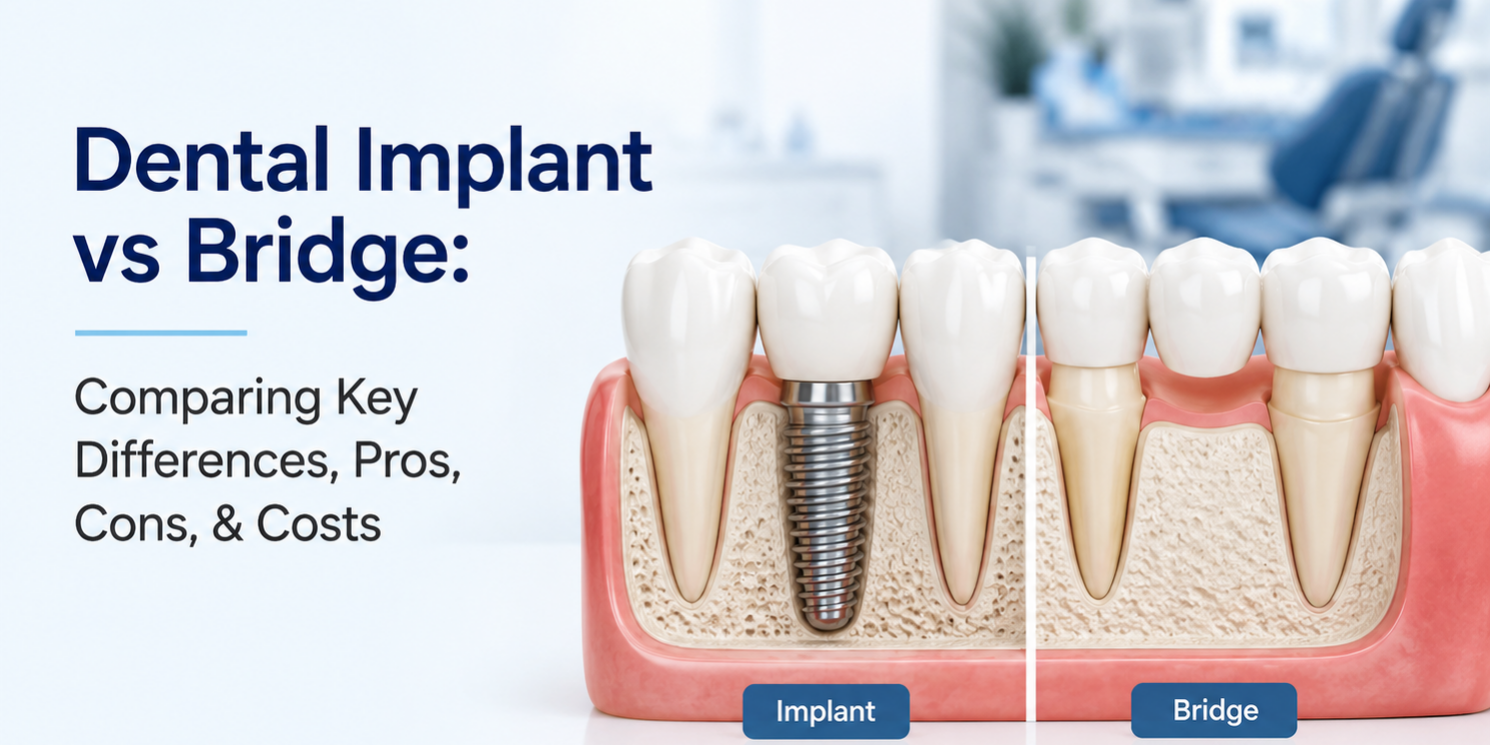
A dental implant replaces the missing tooth root with a small post placed in the jawbone. After the implant bonds with the bone, it can support a custom crown that looks and functions like a natural tooth.
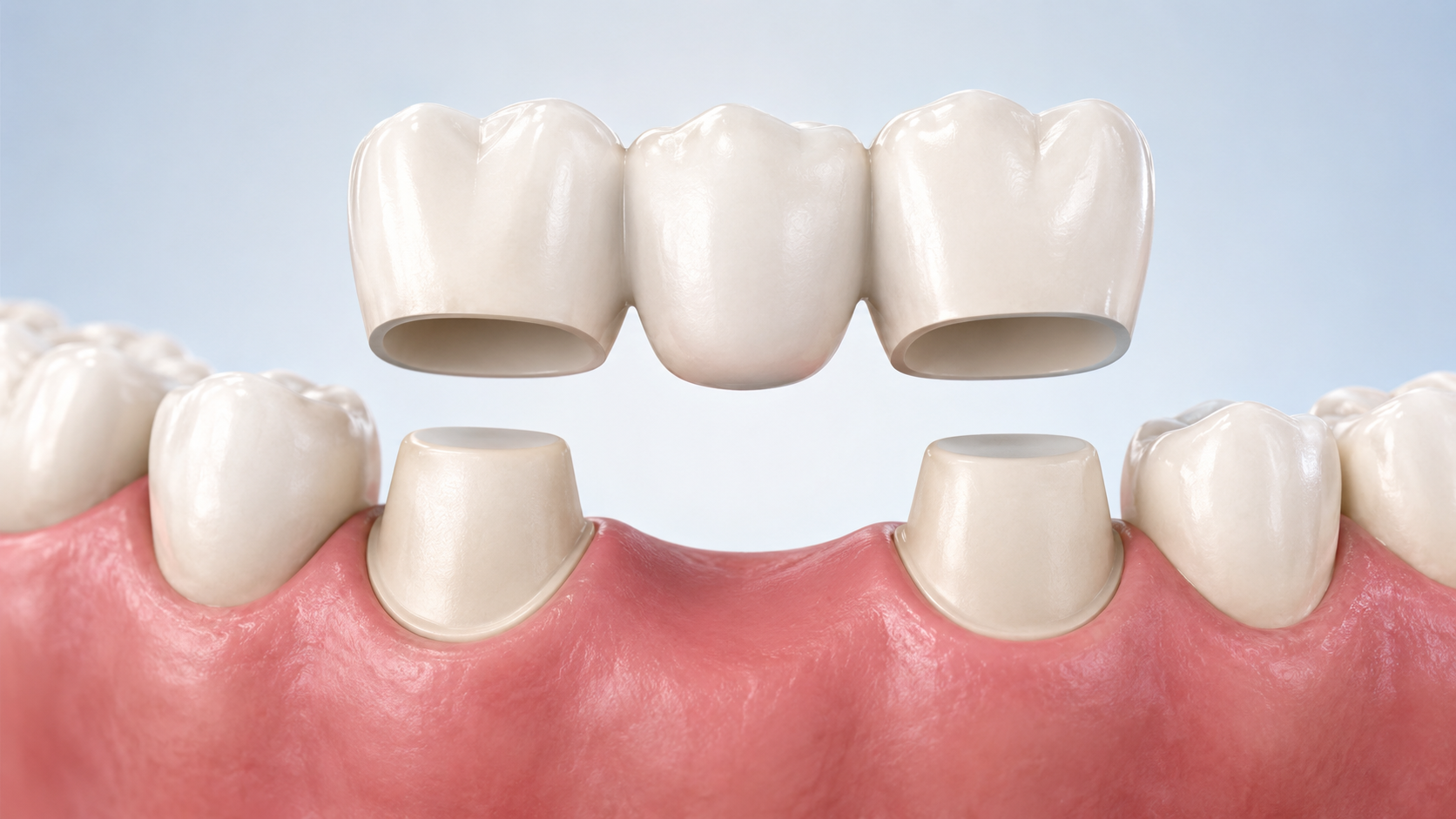
A dental bridge replaces the visible part of the missing tooth but does not replace the root. A traditional bridge is usually supported by crowns placed over the neighboring teeth, with an artificial tooth filling the gap between them.
In simple terms, a dental implant replaces the tooth from the root up. A dental bridge fills the space above the gums.
Dental Implants vs Dental Bridges: Quick Comparison
| Feature | Dental Implant | Dental Bridge |
| Replaces missing tooth root? | Yes | No |
| Replaces visible tooth? | Yes | Yes |
| Supports jawbone health? | Helps stimulate the jawbone | Does not directly stimulate the jawbone |
| Requires surgery? | Yes | Usually no |
| Affects nearby teeth? | Usually does not require reshaping healthy teeth | Often requires reshaping neighboring teeth |
| Treatment timeline | Longer, often several months | Usually faster |
| Upfront cost | Typically higher | Typically lower |
| Long-term durability | Often longer-lasting with proper care | Durable, but may need replacement sooner |
| Best for | Patients who want a long-term, root-replacement solution | Patients who want a faster, non-surgical option |
How Dental Implants Work
Dental implants are designed to function like artificial tooth roots. The implant post is placed into the jawbone, where it gradually bonds with the surrounding bone through a healing process called osseointegration. Once the area has healed, a custom restoration is attached to complete the replacement tooth.
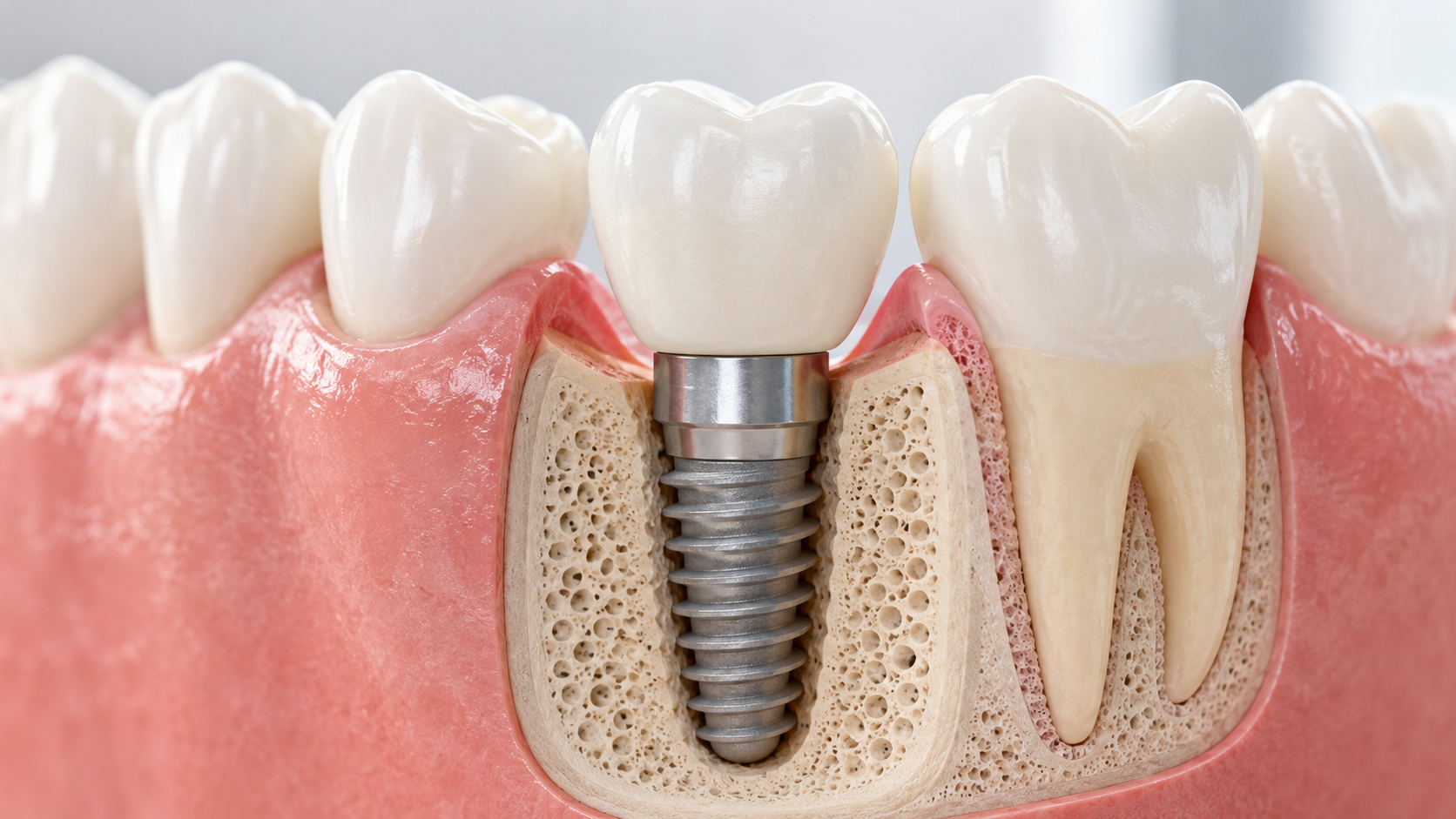
A dental implant treatment may include:
- Implant post: The titanium or ceramic post placed in the jawbone
- Abutment: The connector between the implant and crown
- Dental crown: The visible, natural-looking replacement tooth
- Bone grafting, if needed: A procedure that adds support when the jawbone is too thin or weak for an implant
Because implants replace the missing root, they can provide strong chewing function and help maintain jawbone structure over time.
Pros of Dental Implants
Dental implants are often recommended for patients who want a stable, long-term solution for missing teeth. Key benefits include:
- They replace both the missing tooth and the missing root.
- They help support jawbone health.
- They look and feel similar to natural teeth.
- They can restore strong biting and chewing ability.
- They usually do not require altering nearby healthy teeth.
- They can replace one tooth, several teeth, or support dentures.
- They can last for many years with proper care and maintenance.
Cons of Dental Implants
Dental implants are not the right fit for every patient. Potential drawbacks include:
- They usually cost more upfront than bridges.
- They require oral surgery.
- Treatment may take several months from start to finish.
- Some patients need bone grafting before implant placement.
- Healing can be affected by smoking, uncontrolled diabetes, gum disease, or certain medical conditions.
- They require healthy gums and enough bone support for long-term success.
How Dental Bridges Work
A dental bridge fills the gap left by a missing tooth. With a traditional bridge, the teeth on both sides of the gap are reshaped and covered with crowns. These crowns support the artificial tooth in the middle.
Bridges can be a good option when the neighboring teeth already need crowns or when a patient wants a fixed restoration without implant surgery.
Unlike implants, bridges do not replace the missing tooth root. They restore the appearance and function of the visible tooth, but they do not provide the same jawbone stimulation as an implant.
Pros of Dental Bridges
Dental bridges remain a popular restorative option because they can replace missing teeth relatively quickly. Benefits include:
- They usually do not require surgery.
- They often have a lower upfront cost than implants.
- Treatment is typically faster.
- They are fixed in place and do not need to be removed.
- They can improve chewing, speaking, and smile appearance.
- They may be ideal when nearby teeth already need crowns.
Cons of Dental Bridges
Dental bridges can be effective, but they also have limitations. Potential disadvantages include:
- They do not replace the missing tooth root.
- They do not directly prevent bone loss in the missing tooth area.
- They often require reshaping healthy neighboring teeth.
- The supporting teeth may become more vulnerable to decay or stress.
- Cleaning under the bridge requires special flossing tools or techniques.
- They may need to be replaced sooner than dental implants.
Dental Implant vs Bridge Cost: What Should You Expect?
Cost is one of the biggest factors patients consider when comparing a dental implant vs bridge.
In general, dental implants usually cost more upfront because treatment involves implant placement, healing time, an abutment, and a custom crown. If bone grafting or additional procedures are needed, the total cost can increase.
Dental bridges often cost less upfront, especially when replacing one missing tooth. However, bridges may need to be replaced over time, and the teeth supporting the bridge may eventually need additional dental work.
When comparing cost, it helps to think beyond the initial price. A lower upfront cost may not always mean a lower lifetime cost. Durability, maintenance, replacement needs, and the health of nearby teeth should all be considered.
Dental Implants vs Dental Bridges for Bone Loss
Bone loss is one of the most important differences between dental implants vs dental bridges.
When a natural tooth root is missing, the jawbone no longer receives the same stimulation during chewing. Over time, that area of bone may shrink. Dental implants help address this because the implant post functions like an artificial root, transferring chewing forces into the jawbone.
Dental bridges can restore chewing function and fill the visible gap in your smile, but they do not replace the root. Because of that, they do not provide the same direct support for jawbone preservation.
For patients who are concerned about long-term bone health, facial structure, and bite stability, dental implants are often the preferred solution.
Dental Implants vs Dental Bridges for Shifting Teeth
Both dental implants and bridges can help prevent nearby teeth from drifting into the space left by a missing tooth.
A dental bridge fills the gap by attaching to adjacent teeth. This can help maintain spacing and improve bite function.
A dental implant also fills the missing tooth space, but it does so independently without relying on neighboring teeth for support. This can be especially beneficial when the surrounding teeth are healthy and do not need crowns.
Who Is a Good Candidate for Dental Implants?
You may be a good candidate for dental implants if you:
- Are missing one or more teeth
- Want a long-term tooth replacement option
- Have healthy gums
- Have enough jawbone to support an implant
- Are willing to consider bone grafting if needed
- Want to avoid altering nearby healthy teeth
- Are in good overall health for oral surgery
- Are committed to good brushing, flossing, and dental checkups
- Want a restoration that feels stable and natural when chewing
Dental implants may not be ideal for every patient. Severe gum disease, inadequate bone support, heavy smoking, or certain uncontrolled health conditions may affect candidacy. A dental implant consultation can determine whether implants are right for your smile.
Who Is a Good Candidate for Dental Bridges?
You may be a good candidate for a dental bridge if you:
- Are missing one or more teeth in the same area
- Want a faster treatment option
- Prefer to avoid oral surgery
- Have strong neighboring teeth that can support the bridge
- Have adjacent teeth that already need crowns
- Are not a candidate for dental implants
- Want a fixed restoration instead of a removable denture
- Prefer a lower upfront-cost option
A dental bridge may be especially practical when the teeth next to the gap are damaged, worn, or already need restorative treatment.
Dental Implant vs Bridge: Which One Is Better?
The better option depends on your needs.
A dental implant may be better if you want a long-term solution that replaces the missing root, supports jawbone health, and avoids placing crowns on nearby healthy teeth.
A dental bridge may be better if you want a faster, non-surgical solution or if the neighboring teeth already need crowns.
For many patients, dental implants offer the strongest long-term benefits. However, bridges can still be an excellent choice in the right situation. The best way to decide is to have your teeth, gums, jawbone, bite, and smile goals evaluated by a restorative dentist.
Dental Implants at Temple City Dental in the San Gabriel Valley
At Temple City Dental, we proudly serve patients in Temple City, the San Gabriel Valley, and surrounding communities with personalized cosmetic and restorative dentistry. Our team helps patients restore missing teeth, improve chewing function, protect their oral health, and feel confident about their smiles again.
We offer restorative solutions designed around each patient’s needs, including dental implants, dental crowns & bridges, and other tooth replacement options. For patients comparing dental implants vs dental bridges, we can explain the benefits of each treatment and help determine which option best supports your long-term oral health.
Our dental implant services are ideal for patients who want a stable, natural-looking, and long-lasting solution for missing teeth. Whether you are missing one tooth or several, Temple City Dental can help you explore your options and create a treatment plan that fits your smile.

Schedule a Dental Implant Consultation at Temple City Dental
Choosing between a dental implant vs bridge is an important decision, but you do not have to make it alone. Both treatments can restore your smile, improve chewing function, and help prevent teeth from shifting. For patients who want a long-term solution that also supports jawbone health, dental implants are often an excellent choice.
If you are ready to replace missing teeth or want to learn more about dental implants vs dental bridges, contact Temple City Dental today or schedule an appointment directly online. Our team is here to answer your questions, explain your options, and help you choose the right restorative treatment for your smile.
FAQs
Both dental implants and dental bridges can look natural when they are carefully designed to match the color, shape, and size of your surrounding teeth. Dental implants often provide a more independent, tooth-like result because they replace the missing tooth without relying on neighboring teeth for support.
Dental implants are usually easier to care for because they can often be brushed and flossed much like natural teeth. Dental bridges require extra cleaning under the artificial tooth, often with floss threaders, interdental brushes, or a water flosser to help remove plaque and food debris.
Dental implants can last for many years with proper care, and the implant post may last even longer than the crown attached to it. Dental bridges are also durable, but they may need to be replaced sooner, especially if the supporting teeth develop decay, wear, or gum problems.
The best option depends on your jawbone health, gum health, missing tooth location, budget, timeline, and whether the nearby teeth are healthy. A restorative dentist can examine your bite, take dental X-rays or scans, and recommend the option that best fits your long-term oral health.